Tuesday, 27 May 2025

Discover our full range of health benefit guides and check out some of our favourite fruit recipes.

Sausage, mustard & apple hash in a silver pan

What are the healthiest fruits?

1. Apples

Apples are packed with pectin, a soluble fibre that supports digestion and may have an immune modulatory effect. Cooking varieties of apple are the richer nutritional sources, but all apples are beneficial, especially when eaten whole.

Rich in protective polyphenols, studies also suggest that including foods like apples in your regular diet may reduce the risk of certain cancers and from developing conditions such as type 2 diabetes.

More like this

Discover the health benefits of apples.

Try our tasty apple recipes, including spiced carrot and apple muffins, sausage, mustard and apple hash, and red cabbage with apples.

2. Avocado

Avocados have been applauded for their nutrient density, with just half an average fruit counting as 1 portion of your 5-a-day. They’re an excellent source of monounsaturated fat and vitamin E, and a good source of folate – all of which benefit the heart. Avocado also supplies more soluble fibre than most other fruit and contain a number of useful minerals including iron, copper and potassium.

Discover the health benefits of avocado.

Enjoy avocado in our tomato penne with avocado, spicy chicken and avocado wraps, and avocado and black bean eggs.

3. Bananas

Bananas are another high pectin fruit, this soluble fibre helps promote feelings of fullness, may reduce bloating and has a soothing effect on the gut.

In addition to pectin, bananas contain resistant starch, a type of fibre that has prebiotic properties – it fuels the healthy gut bacteria so they increase in number and as a consequence produce more beneficial compounds called short chain fatty acids.

Discover the health benefits of bananas.

Go bananas for our delicious recipes, including vegan banana pancakes and crunchy peanut butter and banana pots.

4. Blackberries

Anthocyanin pigments are responsible for this berry’s rich colour as well as many of its protective properties. Although low in calories, blackberries have even more vitamin C, folate and fibre than the much-acclaimed blueberry.

Discover the health benefits of blackberries.

Make the most of blackberries with our blackberry muffins, blackberry and apple oat bake, and frozen blackberry smoothie.

5. Blackcurrants

Tart to the taste, blackcurrants are one of the richest berries for their health-promoting nutrients. With 30 times more vitamin C and 40% more protective polyphenols than blueberries, these are the undeclared stars of the fruit garden. Numerous studies suggest they’re of benefit for high blood pressure and other cardiovascular illnesses.

Add the tart taste of blackcurrants to our very berry oat crumble, blackcurrant compote and blackcurrant no-churn ice cream.

Stack of Blueberry & lemon pancakes

6. Blueberries

Reputed for being rich in naturally occurring plant compounds such as ellagic acid and anthocyanins – these compounds in blueberries have protective properties, which help the body combat a long list of diseases.

Discover the health benefits of blueberries.

Add juicy blueberries to our blueberry baked oats, banana and blueberry muffins, and blueberry and lemon pancakes.

7. Cherries

Another valuable source of anthocyanins, cherries appear to have anti-inflammatory effects. Initial research has shown that these plant compounds may be beneficial in inflammatory conditions including arthritis. However, more research is needed to replicate these results in human studies.

Discover the health benefits of cherries.

Add cherries to our vegan cherry and almond brownies, cherry smoothie and crunchy granola with berries and cherries.

8. Cranberries

The juice of these little red berries is probably best known for helping to manage urinary tract infections (UTI). Cranberries contain pro-anthocyanidin compounds, which have natural antibacterial benefits and may help prevent escherichia coli from attaching to the surface of the bladder and urinary tract.

There are many studies supporting cranberry juice as a means to help prevent a UTI and its reoccurrence, but it appears to be less effective once the infection has taken hold. Some studies also suggest it may not work for everyone.

If you choose to drink cranberry juice for its potential UTI benefits, opt for an unsweetened 100% juice.

Discover the health benefits of cranberries.

Enjoy cranberries in our oat and cranberry bars, cranberry and raspberry smoothie, and cranberry, pumpkin seed and caramel flapjacks.

9. Grapefruit

Eating citrus fruit regularly is thought to improve heart health since a diet high in citrus flavonoids – the plant compounds found in the likes of grapefruit – may help lower the risk of stroke. Grapefruit is also rich in potassium and fibre which help manage blood pressure.

Discover the health benefits of grapefruit.

Add zingy grapefruit to our prawn, avocado and tamarind salad, sweet potato pancakes with orange and grapefruit, and hot-smoked salmon and grapefruit salad.

10. Grapes

As the skin and seeds of grapes are loaded with nutrients and protective plant compounds, it’s best to enjoy grapes whole. The plant compounds in grapes, including resveratrol and quercetin, are thought to benefit the cardiovascular system, protecting it from inflammatory damage.

Discover the health benefits of grapes.

Use up the grapes in your fridge to make our turkey salad with grapes and walnuts, baked feta with sumac and grapes, and rainbow fruit skewers.

Rainbow fruit skewers

11. Kiwi

Compared with other commonly eaten fruit, kiwi is unrivalled for its nutrient density, health benefits and ability to support heart health. Regularly eating the fruit appears to increase high-density lipoprotein (HDL) – the so-called ‘good’ cholesterol – reduce other blood triglycerides (fats) and minimises platelet aggregation, which over time may lead to atherosclerosis. Kiwi also helps manage blood pressure, thanks to its effects on the angiotensin-converting enzyme.

Discover the health benefits of kiwi.

Try kiwi in our watermelon lollies, kiwi smoothie and fruit and seed yogurt.

12. Olives

Rich in polyphenols, olives may help reduce the risk of chronic diseases including atherosclerosis and cancer. Oleocanthal is one such polyphenol and appears to share the same pharmacological activity as ibuprofen, acting as a potent natural anti-inflammatory. This useful property has been associated with positive effects in those living with rheumatoid arthritis.

Discover the health benefits of olives.

Add the salty hit of olives to our chicken and olive casserole, pesto and olive-crusted fish, veggie olive wraps with mustard vinaigrette.

13. Oranges

Like other citrus fruit, oranges contain health-promoting compounds which research suggests may support the body and protect us from conditions such as heart disease and cancer. Don’t discard the peel because it contains higher amounts of certain nutrients, which means using the zest in recipes will give your diet an extra boost.

Discover the health benefits of oranges.

Put oranges to good use with our recipes for halloumi, carrot and orange salad, orange and dark chocolate yogurt bowls, and Moroccan orange cake.

14. Papaya

A tropical fruit loaded with vitamin C and fibre, unripe papaya is a source of the enzyme papain which is useful for breaking down protein and tenderising meat. Being orange in colour, papaya is a source of carotenoids – in particular, bioavailable provitamin A in the form of beta-carotene, beta-cryptoxanthin and lycopene.

Add tropical papaya to our summer salmon with papaya salsa, seared beef and papaya salad with soy dressing, and jerk chicken salad.

15. Pears

Good for the heart and blood pressure, pears are rich in folate and potassium and are a useful source of both soluble and insoluble fibre. Enjoy the fruit with the skin intact for optimal benefits.

Discover the health benefits of pears.

Get cooking with our recipes for flourless chocolate and pear cake, goat’s cheese, pear and walnut tartines, and pear and blackberry bircher.

16. Plums

With equal and, possibly more, antioxidant activity than blueberries, the darker the skin of the plum, the richer its beneficial plant compounds. These compounds are believed to support memory, boost bone health and have anti-inflammatory properties.

Discover the health benefits of plums.

Use plums to make our rustic harvest fruit tart, sticky plum flapjack bars, and spiced plum and blackberry crumble.

Rustic harvest fruit tart cut into slices

17. Pomegranates

With studies suggesting pomegranate juice has an antioxidant activity three times higher than that of red wine and green tea, it would be fair to expect some pretty impressive health benefits. Current studies don’t disappoint with research underway to examine the effects of pomegranate juice on the inflammatory markers of patients hospitalised with covid-19.

Discover the health benefits of pomegranate.

Enjoy pomegranate in our recipes, including pomegranate chicken with almond couscous, chicken tagine with lemon, olives and pomegranate, and beetroot and halloumi salad with pomegranate and dill.

18. Strawberries

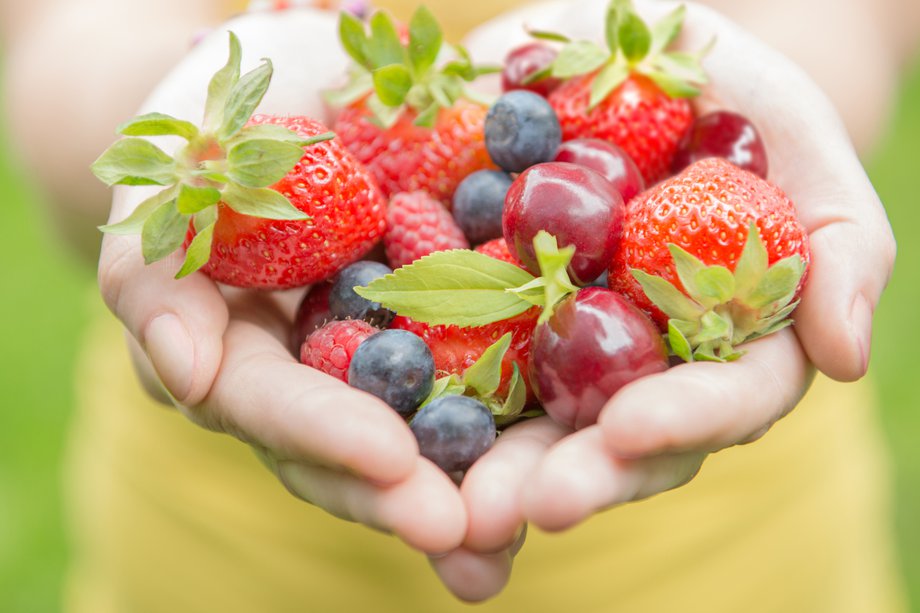
Deliciously sweet, low-calorie and with just seven berries comprising 1 of your 5-a-day, strawberries are a top healthy treat. Rich in polyphenols, eating strawberries may help to improve digestion, brain function and support heart health.

Discover the health benefits of strawberries.

Enjoy strawberries in our strawberry smoothie, vegan strawberry pancakes, and avocado and strawberry ices.

19. Tomatoes

Supplying naringenin, a flavonoid with anti-inflammatory properties, tomatoes may help our fight against diabetes, heart disease and even have anti-allergenic properties.

With much of the goodness found in the skin, it’s well worth eating tomatoes whole.

Discover the health benefits of tomatoes.

Add colourful tomatoes to our tomato and spinach kitchari, spiced salmon and tomato traybake, and roasted aubergine and tomato curry.

20. Watermelon

As its name suggests watermelon has a high water content – approximately 92% – and may, as a result, help maintain hydration. It’s a useful source of vitamins and minerals, including vitamin C and potassium, and is especially rich in carotenoids, such as lycopene. In fact, the type of lycopene watermelon provides is more readily available, making this fruit an extremely valuable source.

Discover the health benefits of watermelon.

Add refreshing watermelon to our watermelon, prawn and avocado salad, watermelon smoothie and watermelon and spinach super salad.


How much fruit should I eat each day?

Your fruit needs depend on your age, sex, height, weight, and physical activity. This amount can also depend on whether you are pregnant or breastfeeding.

Find the right amount for you by getting your MyPlate Plan. For general guidance by age, see the table below.

What counts as a cup of fruit?

In general, the following counts as 1 cup from the Fruit Group:

  • 1 cup of fresh, frozen, or canned fruit
  • ½ cup of dried fruit
  • 1 cup of 100% fruit juice

The table below shows amounts that count as 1 cup from the Fruit Group.

Friday, 14 February 2025

Complyfi ComplyFi ComplyFi ComplyFi

About ComplyFi


Founder & CEO 

Zack Fay is a seasoned GRC consultant with a wealth of experience in helping organizations navigate regulatory frameworks, including SOC 2, ISO 27001, NIST, HIPAA, GDPR, and CCPA/CPRA. He has successfully led GRC initiatives for startups and SMBs, focusing on cybersecurity audits, risk assessments, vendor management, and security awareness training. As a CISA-certified professional, Zack is dedicated to developing compliant and effective security programs that not only safeguard operations but also foster trust with customers.


ComplyFi ComplyFi ComplyFi ComplyFi ComplyFi ComplyFi ComplyFi ComplyFi ComplyFi ComplyFi ComplyFi ComplyFi ComplyFi ComplyFi ComplyFi

Saturday, 19 March 2022

Beets

Not to be outperformed by their tops, ruby red beets are a main wellspring of nitrates, which are really great for your circulatory strain. In addition, you get fiber and different supplements from beets. Cooking tip: Roasting beets supports their regular pleasantness. Wrap every beet exclusively in foil and heat at 350 F until delicate. Or then again avoid the stove. Grind crude beets and add to slaws or as a garnish in sandwiches.

#food #foodporn #foodie #foodlover #foodoftheday #foodpics #feedfeed #yum #eatfamous #vscofood #lovefood #noleftovers #forkyeah #eeeeeats #buzzfeast #myfab5 #spoonfeed #eatingfortheinsta #foodprnshare #thedailybite #plantbased #recipe

#vegansofig #veganfoodshare #whatveganseat #veganfood #vegetarian #govegan #crueltyfree #veganism #organic #glutenfree #vegansofinstagram #veganfoodporn #dairyfree #hclf #veganlife #rawvegan #cleaneating #healthyfood #bestofvegan #raw #veganlifestyle #vegangirl #wholefoods #rawfood #fruit #breakfast #paleo 

Friday, 25 January 2019

Eight tips for healthy eating

Eight tips for healthy eating

Tips for healthy eating
These eight practical tips cover the basics of healthy eating, and can help you make healthier choices.
The key to a healthy diet is to:
  • Eat the right amount of calories for how active you are, so that you balance the energy you consume with the energy you use. If you eat or drink too much, you'll put on weight. If you eat and drink too little, you'll lose weight. 
  • Eat a wide range of foods to ensure that you're getting a balanced diet and that your body is receiving all the nutrients it needs.
It is recommended that men have around 2,500 calories a day (10,500 kilojoules). Women should have around 2,000 calories a day (8,400 kilojoules). Most adults are eating more calories than they need, and should eat fewer calories.

Base your meals on starchy carbohydrates

Starchy carbohydrates should make up just over one third of the food you eat. They include potatoes, bread, rice, pasta and cereals.
Choose wholegrain varieties (or eat potatoes with their skins on) when you can: they contain more fibre, and can help you feel full for longer.
Most of us should eat more starchy foods: try to include at least one starchy food with each main meal. Some people think starchy foods are fattening, but gram for gram the carbohydrate they contain provides fewer than half the calories of fat.
Keep an eye on the fats you add when you're cooking or serving these types of foods because that's what increases the calorie content, for example oil on chips, butter on bread and creamy sauces on pasta.

Eat lots of fruit and veg

It's recommended that we eat at least five portions of a variety of fruit and veg every day. It's easier than it sounds.
Why not chop a banana over your breakfast cereal, or swap your usual mid-morning snack for a piece of fresh fruit?
Unsweetened 100% fruit juice, vegetable juice and smoothies can only ever count as a maximum of one portion of your 5 A DAY. For example, if you have two glasses of fruit juice and a smoothie in one day, that still only counts as one portion.

Wednesday, 14 February 2018

Potatoes


Why they’re Healthy:

One red potato contains 66 micrograms of cell-building folate — about the same amount found in one cup of spinach or broccoli.

One sweet potato has almost eight times the amount of cancer-fighting and immune-boosting vitamin A you need daily.

Quick Tip: Let your potato cool before eating. Research shows that doing so can help you burn close to 25 percent more fat after a meal, thanks to a fat-resistant starch.

Monday, 18 September 2017

45 best health tips ever We've done the legwork for you and here they are: the 45 best health tips. Give yourself a boost.

We've done the legwork for you and here they are: the 45 best health tips. Make that 46 - taking the time to read this tops the list.

1. Copy your kitty: Learn to do stretching exercises when you wake up. It boosts circulation and digestion, and eases back pain.
2. Don’t skip breakfast. Studies show that eating a proper breakfast is one of the most positive things you can do if you are trying to lose weight. Breakfast skippers tend to gain weight. A balanced breakfast includes fresh fruit or fruit juice, a high-fibre breakfast cereal, low-fat milk or yoghurt, wholewheat toast, and a boiled egg.
3. Brush up on hygiene. Many people don't know how to brush their teeth properly. Improper brushing can cause as much damage to the teeth and gums as not brushing at all. Lots of people don’t brush for long enough, don’t floss and don’t see a dentist regularly. Hold your toothbrush in the same way that would hold a pencil, and brush for at least two minutes.

This includes brushing the teeth, the junction of the teeth and gums, the tongue and the roof of the mouth. And you don't need a fancy, angled toothbrush – just a sturdy, soft-bristled one that you replace each month.
4. Neurobics for your mind. Get your brain fizzing with energy. American researchers coined the term ‘neurobics’ for tasks which activate the brain's own biochemical pathways and to bring new pathways online that can help to strengthen or preserve brain circuits.

Brush your teeth with your ‘other’ hand, take a new route to work or choose your clothes based on sense of touch rather than sight. People with mental agility tend to have lower rates of Alzheimer's disease and age-related mental decline.
5. Get what you give! Always giving and never taking? This is the short road to compassion fatigue. Give to yourself and receive from others, otherwise you’ll get to a point where you have nothing left to give. And hey, if you can’t receive from others, how can you expect them to receive from you?

Read: Mind aerobics
6. Get spiritual. A study conducted by the formidably sober and scientific Harvard University found that patients who were prayed for recovered quicker than those who weren’t, even if they weren’t aware of the prayer.
7. Get smelly. Garlic, onions, spring onions and leeks all contain stuff that’s good for you. A study at the Child’s Health Institute in Cape Town found that eating raw garlic helped fight serious childhood infections. Heat destroys these properties, so eat yours raw, wash it down with fruit juice or, if you’re a sissy, have it in tablet form.
8. Knock one back. A glass of red wine a day is good for you. A number of studies have found this, but a recent one found that the polyphenols (a type of antioxidant) in green tea, red wine and olives may also help protect you against breast cancer. It’s thought that the antioxidants help protect you from environmental carcinogens such as passive tobacco smoke.
9. Bone up daily. Get your daily calcium by popping a tab, chugging milk or eating yoghurt. It’ll keep your bones strong. Remember that your bone density declines after the age of 30. You need at least 200 milligrams daily, which you should combine with magnesium, or it simply won’t be absorbed.
10. Berries for your belly. Blueberries, strawberries and raspberries contain plant nutrients known as anthocyanidins, which are powerful antioxidants. Blueberries rival grapes in concentrations of resveratrol – the antioxidant compound found in red wine that has assumed near mythological proportions. Resveratrol is believed to help protect against heart disease and cancer.
11. Curry favour. Hot, spicy foods containing chillies or cayenne pepper trigger endorphins, the feel-good hormones. Endorphins have a powerful, almost narcotic, effect and make you feel good after exercising. But go easy on the lamb, pork and mutton and the high-fat, creamy dishes served in many Indian restaurants.
12. Cut out herbs before ops. Some herbal supplements – from the popular St John's Wort and ginkgo biloba to garlic, ginger, ginseng and feverfew – can cause increased bleeding during surgery, warn surgeons. It may be wise to stop taking all medication, including herbal supplements, at least two weeks before surgery, and inform your surgeon about your herbal use.
13. I say tomato. Tomato is a superstar in the fruit and veggie pantheon. Tomatoes contain lycopene, a powerful cancer fighter. They’re also rich in vitamin C. The good news is that cooked tomatoes are also nutritious, so use them in pasta, soups and casseroles, as well as in salads.

The British Thoracic Society says that tomatoes and apples can reduce your risk of asthma and chronic lung diseases. Both contain the antioxidant quercetin. To enjoy the benefits, eat five apples a week or a tomato every other day.
14. Eat your stress away. Prevent low blood sugar as it stresses you out. Eat regular and small healthy meals and keep fruit and veggies handy. Herbal teas will also soothe your frazzled nerves.

Eating unrefined carbohydrates, nuts and bananas boosts the formation of serotonin, another feel-good drug. Small amounts of protein containing the amino acid tryptamine can give you a boost when stress tires you out.
15. Load up on vitamin C.We need at least 90 mg of vitamin C per day and the best way to get this is by eating at least five servings of fresh fruit and vegetables every day. So hit the oranges and guavas!
16. No folly in folic acid. Folic acid should be taken regularly by all pregnant mums and people with a low immunity to disease. Folic acid prevents spina bifida in unborn babies and can play a role in cancer prevention. It is found in green leafy vegetables, liver, fruit and bran.
17. A for Away. This vitamin, and beta carotene, help to boost immunity against disease. It also assists in the healing process of diseases such as measles and is recommended by the WHO. Good natural sources of vitamin A are kidneys, liver, dairy products, green and yellow vegetables, pawpaw, mangoes, chilli pepper, red sorrel and red palm oil.
18. Pure water. Don’t have soft drinks or energy drinks while you're exercising. Stay properly hydrated by drinking enough water during your workout (just don't overdo things, as drinking too much water can also be dangerous).

While you might need energy drinks for long-distance running, in shorter exercise sessions in the gym, your body will burn the glucose from the soft drink first, before starting to burn body fat. Same goes for eating sweets.
19. GI, Jane. Carbohydrates with a high glycaemic index, such as bread, sugar, honey and grain-based food will give instant energy and accelerate your metabolism. If you’re trying to burn fat, stick to beans, rice, pasta, lentils, peas, soya beans and oat bran, all of which have a low GI count.
20. Mindful living. You've probably heard the old adage that life's too short to stuff a mushroom. But perhaps you should consider the opposite: that life's simply too short NOT to focus on the simple tasks. By slowing down and concentrating on basic things, you'll clear your mind of everything that worries you.

Really
 concentrate on sensations and experiences again: observe the rough texture of a strawberry's skin as you touch it, and taste the sweet-sour juice as you bite into the fruit; when your partner strokes your hand, pay careful attention to the sensation on your skin; and learn to really focus on simple tasks while doing them, whether it's flowering plants or ironing your clothes.
21. The secret of stretching. When you stretch, ease your body into position until you feel the stretch and hold it for about 25 seconds. Breathe deeply to help your body move oxygen-rich blood to those sore muscles. Don't bounce or force yourself into an uncomfortable position.
22. Do your weights workout first. Experts say weight training should be done first, because it's a higher intensity exercise compared to cardio. Your body is better able to handle weight training early in the workout because you're fresh and you have the energy you need to work it.

Conversely, cardiovascular exercise should be the last thing you do at the gym, because it helps your body recover by increasing blood flow to the muscles, and flushing out lactic acid, which builds up in the muscles while you're weight training. It’s the lactic acid that makes your muscles feel stiff and sore.
23. Burn fat during intervals. To improve your fitness quickly and lose weight, harness the joys of interval training. Set the treadmill or step machine on the interval programme, where your speed and workload varies from minute to minute. Build up gradually, every minute and return to the starting speed. Repeat this routine. Not only will it be less monotonous, but you can train for a shorter time and achieve greater results.
24. Your dirtiest foot forward. If your ankles, knees, and hips ache from running on pavement, head for the dirt. Soft trails or graded roads are a lot easier on your joints than the hard stuff. Also, dirt surfaces tend to be uneven, forcing you to slow down a bit and focus on where to put your feet – great for agility and concentration.
25. Burn the boredom, blast the lard. Rev up your metabolism by alternating your speed and intensity during aerobic workouts. Not only should you alternate your routine to prevent burnout or boredom, but to give your body a jolt.

If you normally walk at 6.5km/h on the treadmill or take 15 minutes to walk a km, up the pace by going at 8km/h for a minute or so during your workout. Do this every five minutes or so. Each time you work out, increase your bouts of speed in small increments.
26. Cool off without a beer. Don’t eat carbohydrates for at least an hour after exercise. This will force your body to break down body fat, rather than using the food you ingest. Stick to fruit and fluids during that hour, but avoid beer.
27. ‘Okay, now do 100 of those’. Instead of flailing away at gym, enlist the help – even temporarily – of a personal trainer. Make sure you learn to breathe properly and to do the exercises the right way. You’ll get more of a workout while spending less time at the gym.
28. Stop fuming. Don’t smoke and if you smoke already, do everything in your power to quit. Don’t buy into that my-granny-smoked-and-lived-to-be-90 crud – not even the tobacco giants believe it. Apart from the well-known risks of heart disease and cancer, orthopaedic surgeons have found that smoking accelerates bone density loss and constricts blood flow. So you could live to be a 90-year-old amputee who smells of stale tobacco smoke. Unsexy.
29. Ask about Mad Aunt Edith. Find out your family history. You need to know if there are any inherited diseases prowling your gene pool. According to the Mayo Clinic, USA, finding out what your grandparents died of can provide useful – even lifesaving – information about what’s in store for you. And be candid, not coy: 25% of the children of alcoholics become alcoholics themselves.
30. Do self-checks. Do regular self-examinations of your breasts. Most partners are more than happy to help, not just because breast cancer is the most common cancer among SA women. The best time to examine your breasts is in the week after your period.
31. My smear campaign. Have a pap smear once a year. Not on our list of favourite things, but it’s vital. Cervical cancer kills 200 000 women a year and it’s the most prevalent form of cancer among black women, affecting more than 30 percent.

But the chances of survival are nearly 100 percent if it’s detected early. Be particularly careful if you became sexually active at an early age, have had multiple sex partners or smoke.
32. Understand hormones. Recent research suggests that short-term (less than five years) use of HRT is not associated with an increase in the risk of breast cancer, but that using it for more than ten years might be. Breast cancer is detected earlier in women using HRT, as they are more alert to the disease than other women.
32. Beat the sneezes. There are more than 240 allergens, some rare and others very common. If you’re a sneezer due to pollen: close your car’s windows while driving, rather switch on the internal fan (drawing in air from the outside), and avoid being outdoors between 5am and 10 am when pollen counts are at their highest; stick to holidays in areas with low pollen counts, such as the seaside and stay away from freshly cut grass.
33. Doggone. If you’re allergic to your cat, dog, budgie or pet piglet, stop suffering the ravages of animal dander: Install an air filter in your home.

Keep your pet outside as much as possible and brush him outside of the home to remove loose hair and other allergens. Better yet, ask someone else to do so.
34. Asthma-friendly sports. Swimming is the most asthma-friendly sport of all, but cycling, canoeing, fishing, sailing and walking are also good, according to the experts.

Asthma need not hinder peak performance in sport. 1% of the US Olympic team were asthmatics – and between them they won 41 medals.
35. Deep heat. Sun rays can burn even through thick glass, and under water. Up to 35% of UVB rays and 85% of UVA rays penetrate thick glass, while 50% of UVB rays and 75% of UVA rays penetrate a meter of water and wet cotton clothing.

Which means you’ll need sunscreen while driving your car on holiday, and water resistant block if you’re swimming.
36. Fragrant ageing. Stay away from perfumed or flavoured suntan lotions which smell of coconut oil or orange if you want your skin to stay young. These lotions contain psoralen, which speeds up the ageing process. Rather use a fake-tan lotion. Avoid sun beds, which are as bad as the sun itself.
37. Sunscreen can be a smokescreen. Sunscreen is unlikely to stop you from being sunburned, or to reduce your risk of developing skin cancer. That’s because most people don’t apply it properly, and stay in the sun too long.

The solution? Slather on sunscreen daily and reapply it often, especially if you’ve been in the water. How much? At least enough to fill a shot glass.
38. Laugh and cry. Having a good sob is reputed to be good for you. So is laughter, which has been shown to help heal bodies, as well as broken hearts. Studies in Japan indicate that laughter boosts the immune system and helps the body shake off allergic reactions.
39. It ain’t over till it’s over. End relationships that no longer work for you, as you could be spending time in a dead end. Rather head for more meaningful things. You could be missing opportunities while you’re stuck in a meaningless rut, trying to breathe life into something that is long gone.
40. Strong people go for help. Ask for assistance. Gnashing your teeth in the dark will not get you extra brownie points. It is a sign of strength to ask for assistance and people will respect you for it. If there is a relationship problem, the one who refuses to go for help is usually the one with whom the problem lies to begin with.
41. Save steamy scenes for the bedroom. Showering or bathing in water that’s too hot will dry out your skin and cause it to age prematurely. Warm water is much better.

Apply moisturiser while your skin is still damp – it’ll be absorbed more easily. Adding a little olive oil to your bath with help keep your skin moisturised too.
42. Here’s the rub. Improve your circulation and help your lymph glands to drain by the way you towel off. Helping your lymph glands function can help prevent them becoming infected.

When drying off your limbs and torso, brush towards the groin on your legs and towards the armpits on your upper body. You can do the same during gentle massage with your partner.
43. Sugar-coated. More than three million South Africans suffer from type 2 diabetes, and the incidence is increasing – with new patients getting younger. New studies show this type of diabetes is often part of a metabolic syndrome (X Syndrome), which includes high blood pressure and other risk factors for heart disease.

More than 80% of type 2 diabetics die of heart disease, so make sure you control your glucose levels, and watch your blood pressure and cholesterol counts.
44. Relax, it’s only sex. Stress and sex make bad bedfellows, it seems. A US survey showed that stress, kids and work are main factors to dampen libido. With the advent of technology that allows us to work from home, the lines between our jobs and our personal lives have become blurred.

People work longer hours, commutes are longer and work pervades all aspects of our lives, including our sexual relationships. Put nooky and intimacy on the agenda, just like everything else.
45. Good night, sweetheart. Rest heals the body and has been shown to lessen the risk of heart trouble and psychological problems.

Monday, 27 February 2017

Beets

Roasted or pickled, this root vegetable contains high levels of antioxidants that fight cancer, as well as lutein, which protects the eyes. Don't throw out those leaves! Beet greens are the most nutritious part of the vegetable and can be cooked like any other dark leafy green. Try one of these recipes where beets are the star.

Brussels sprouts

These balls of antioxidants can help detoxify cancer-causing free radicals, and with 80 percent of your daily vitamin C in just 1/2 cup, also help fight heart disease and ward off cataracts. Try sautĆ©ing them with a little bacon or olive oil and mustard for a smoky kick.

Alfalfa sprouts

This tiny powerhouse is rich in beta-carotene, an antioxidant that protects against lung cancer and helps maintain healthy skin, hair, nails, gums, glands, bones, and teeth. It's also a good source of vitamin E, which may help prevent heart attacks, stokes, and lower the risk of death from bladder cancer. Try this chicken, avocado, alfalfa sprouts sandwich.

Spinach

Spinach is packed with carotenoids—antioxidants that promote healthy eyes and help prevent macular degeneration, the leading cause of blindness in older adults. Cooking the green helps make lutein (a carotenoid) more absorbable by your body. Try this spinach and goat cheese omelet.

Red bell pepper

One medium pepper is light on calories (only 32!) but heavy on vitamin C, providing 150 percent of your recommended daily value and warding off atherosclerosis, which can lead to heart disease. Try one of these recipes for stuffed peppers.

Broccoli

Broccoli is full of cancer-fighting antioxidants. One study found men who ate 5 servings or more per week of cruciferous veggies (broccoli's one of them!) were half as likely to develop bladder cancers over a 10-year period as men who rarely ate them. Enjoy with some broccoli cheddar soup.

Kale

This veggie's curly green leaves are chock full of vitamin C, an antioxidant that may reduce the risk of heart disease by lowering levels of LDL, or "bad" cholesterol. Try one of these easy kale recipes.

Peas

Tiny but mighty, one study in the International Journal of Cancer found that daily consumption of green peas along with other legumes lowered the risk of stomach cancer. Try a brown rice risotto with lemon and green peas.

Onions

You'll get the most out of this veggie's cancer-fighting antioxidants by eating it raw; cooking onions at a high heat significantly reduces the benefits of phytochemicals that protect against lung and prostate cancer. Try combining chopped raw onions with tomatoes, avocado, and jalapeƱo peppers for a blood sugar–friendly chip dip. Finish with a splash of lime juice.

Corn

On the cob or off, just make sure you eat your corn cooked! A study in the Journal of Agricultural Food and Chemistry found that the longer corn was cooked, the higher the level of antioxidants like lutein, which combats blindness in older adults. Try this recipe for coconut grilled corn.

Friday, 3 February 2017

Red Grapes


Red Grapes contain iron, potassium,grapes fiber and an abundance of powerful disease-fighting antioxidants. Although red wine gets most of the publicity, dark colored grapes are the original source of the flavonoids, anthocyanins and resveratrol, which have been shown to help prevent heart disease and cancer. 1 cup of red or purple grapes has 60 calories.

Papayas


Papayas are loaded with vitamin C, folate, carotenoids and natural digestive enzymes that help with protein digestion. 1 cup of cubed papaya has 55 calories.

kiwi


kiwi Kiwifruit, when compared ounce for ounce, has more than twice the vitamin C of an orange. It’s also an excellent source of magnesium, potassium and vitamins A and E. Kiwis have been shown to boost the immune system and reduce respiratory diseases. 1 medium kiwi has 47 calories and 3 grams of fiber.